I wanted to say this towards the end of 2014 but can’t resist the temptation. This year has been a totally different one from what I had planned – almost no travel and no road trips but instead a year where I have learnt a lot about India’s rich culture. Much more than what I got to know from books or my personal experience. I got to know of so many new festivals and traditions that I feel blessed to be around the right people and the right time of the year.
The last week of September was a relaxed one with Thursday off on Gandhi Jayanti, then Friday when it was Dusherra and then finally came the weekend. On Friday morning, SJ asked VT and I to visit her place for Golu. Now, SJ has been asking me to come over every year for quite some time but it never happened. This year we got lucky – the time was right and so was the occasion.

Golu is a festival celebrated in Southern India during Navratras (9 nights) and goes up till the 10th day, Vijayadashmi. The word Golu is a Tamil word and it means Divine Presence. This festival is known by various other names in southern states like Kolu, Bombe Habba (Kannada) or Bomma gullu(Malayalam) or Bommai Kolu (Tamil) or Bommala Koluvu (Telugu). What the festival really entails is figurines of gods, goddesses, saints, and famous devotees are arranged on an odd number of piers. There is no compulsion on following this ritual but if a family starts celebrating this ritual, they should not stop and pass it on to the next generation of the family. I was given to understand that not all Kannadigas follow the festival but they do close the Navratrs by Ayudh Pooja.
When I asked SJ’s mother who was an expert on this subject about why this festival is celebrated, she had a beautiful answer to share. She mentioned that children of the household get to understand our tradition and culture through these dolls and that is one reason why this festival is also referred to as the “Dolls Festival”. People believe that every night, these dolls come to life and bring positive energy in the household.
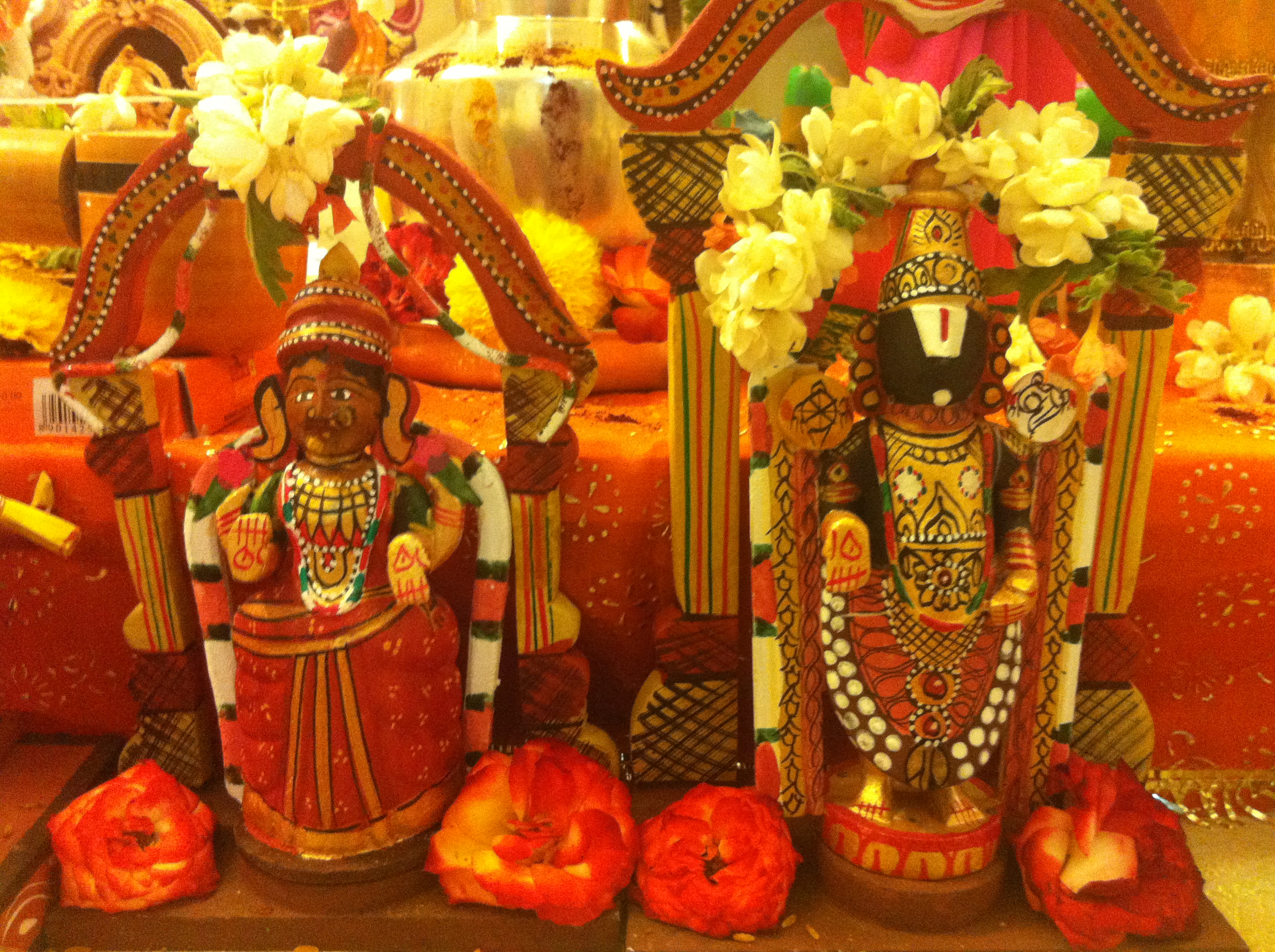
Every day, rituals are performed and prasadam is offered to the deities. Friends, family, relatives, colleagues are invited to come over. Isn’t that such a great way to learn from each other? SJ’s dolls ranged from Dashavataram, to stories from Ramayana, Mahabharata and even the replica of UNESCO preserved structures like that in Mahabalipuram. Not just that, there were dolls depicting the Mysore Dasara set up with royal family, elephants and danseuse too.
I totally agree that learning through seeing is the most effective.
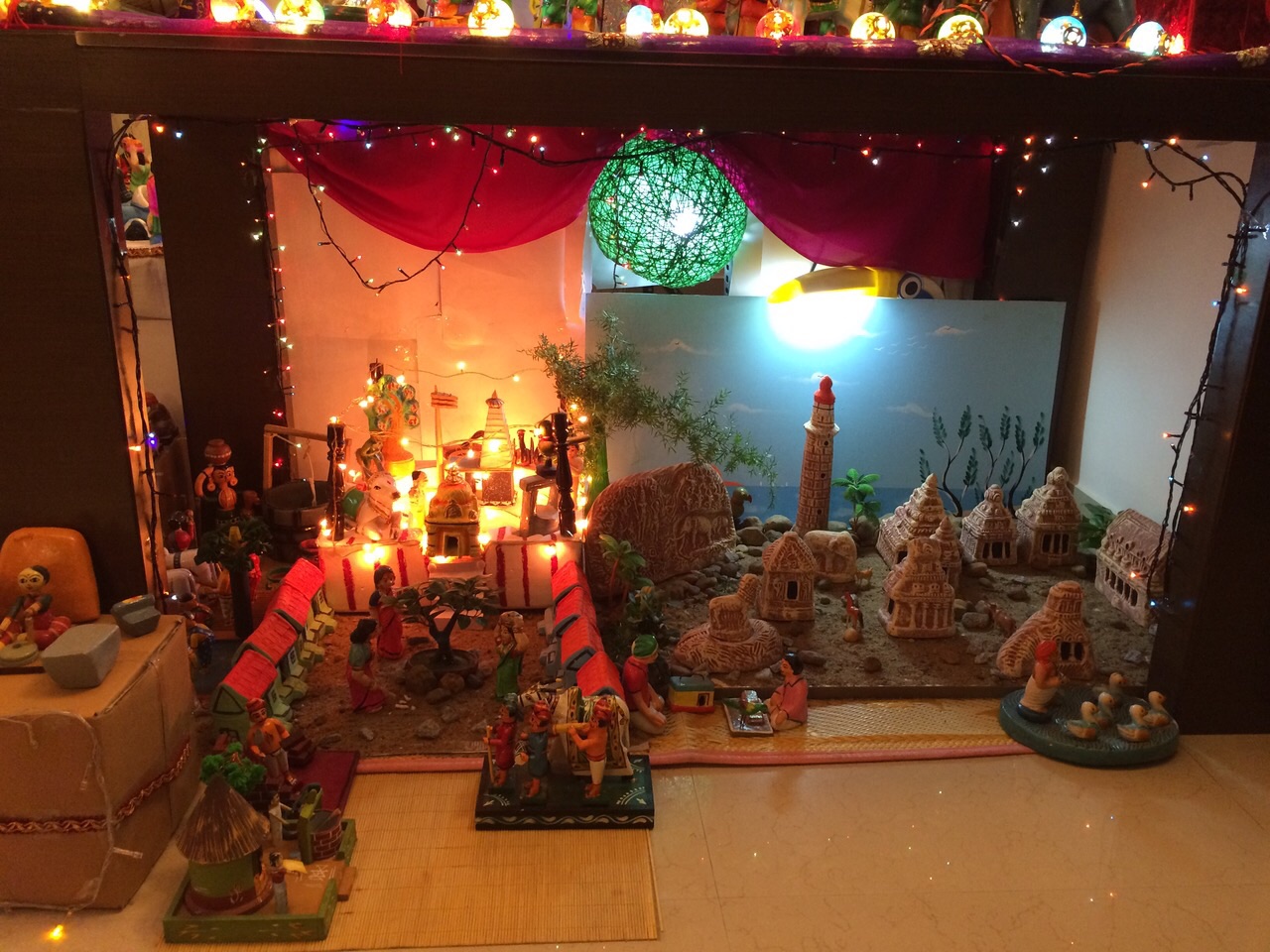
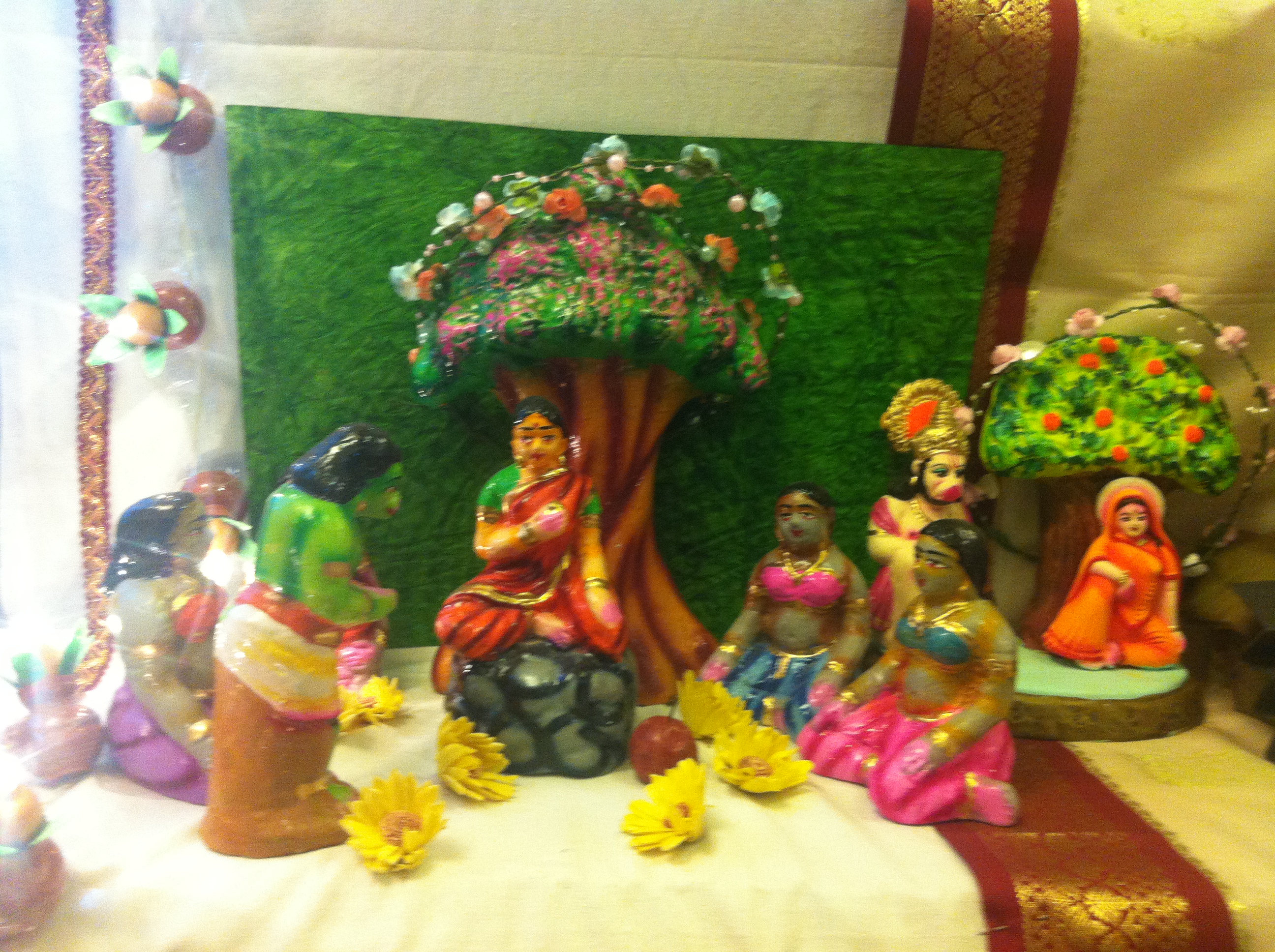

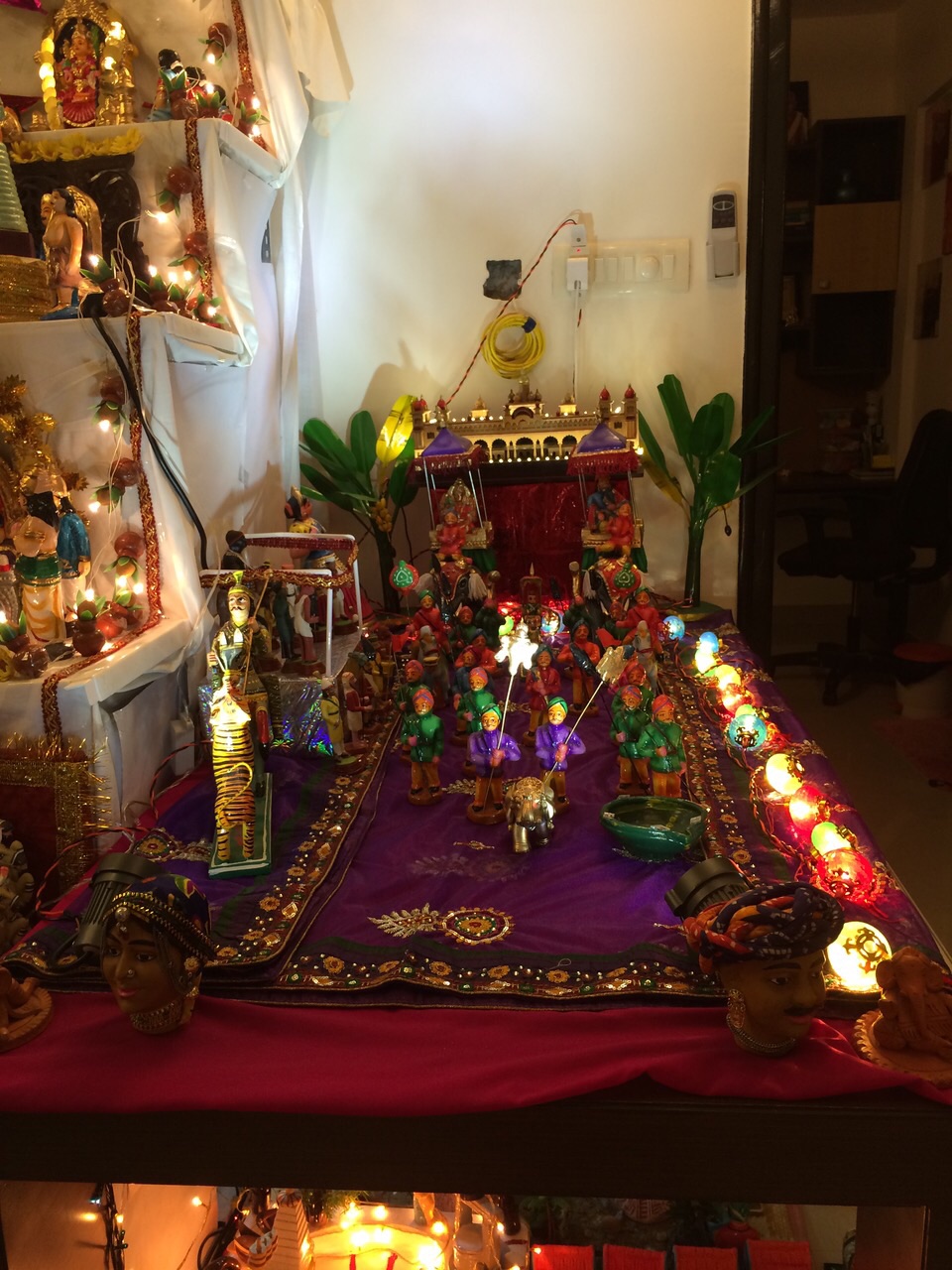
Not just the epics – Ramayana & Mahabharat, there are so many other things to see in the way these arrangements are done – like old times and modern weddings, some artisans at work and dinner being served on a plantain leaf. There was so much more that I was wondering how many pictures I could click.

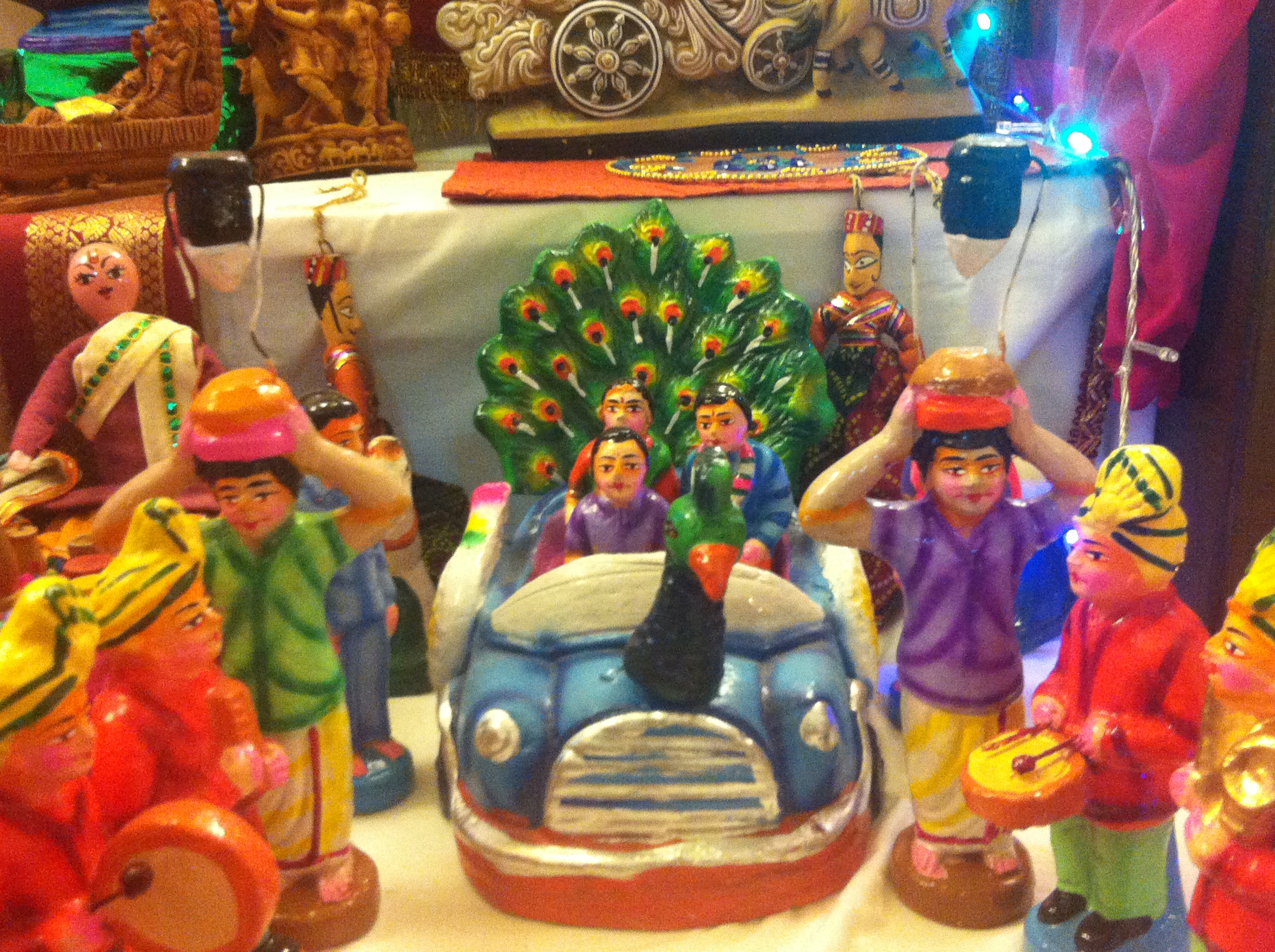
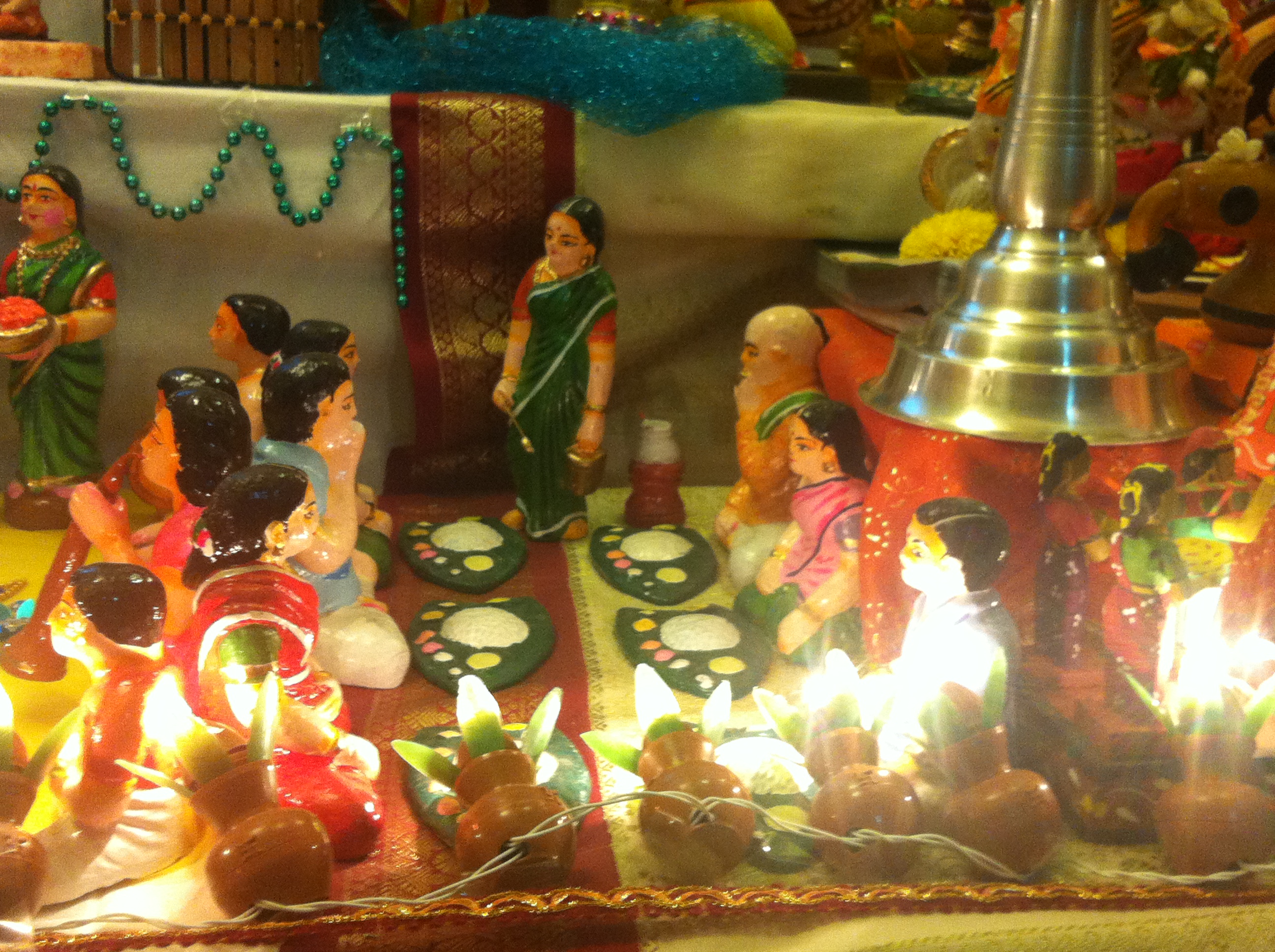
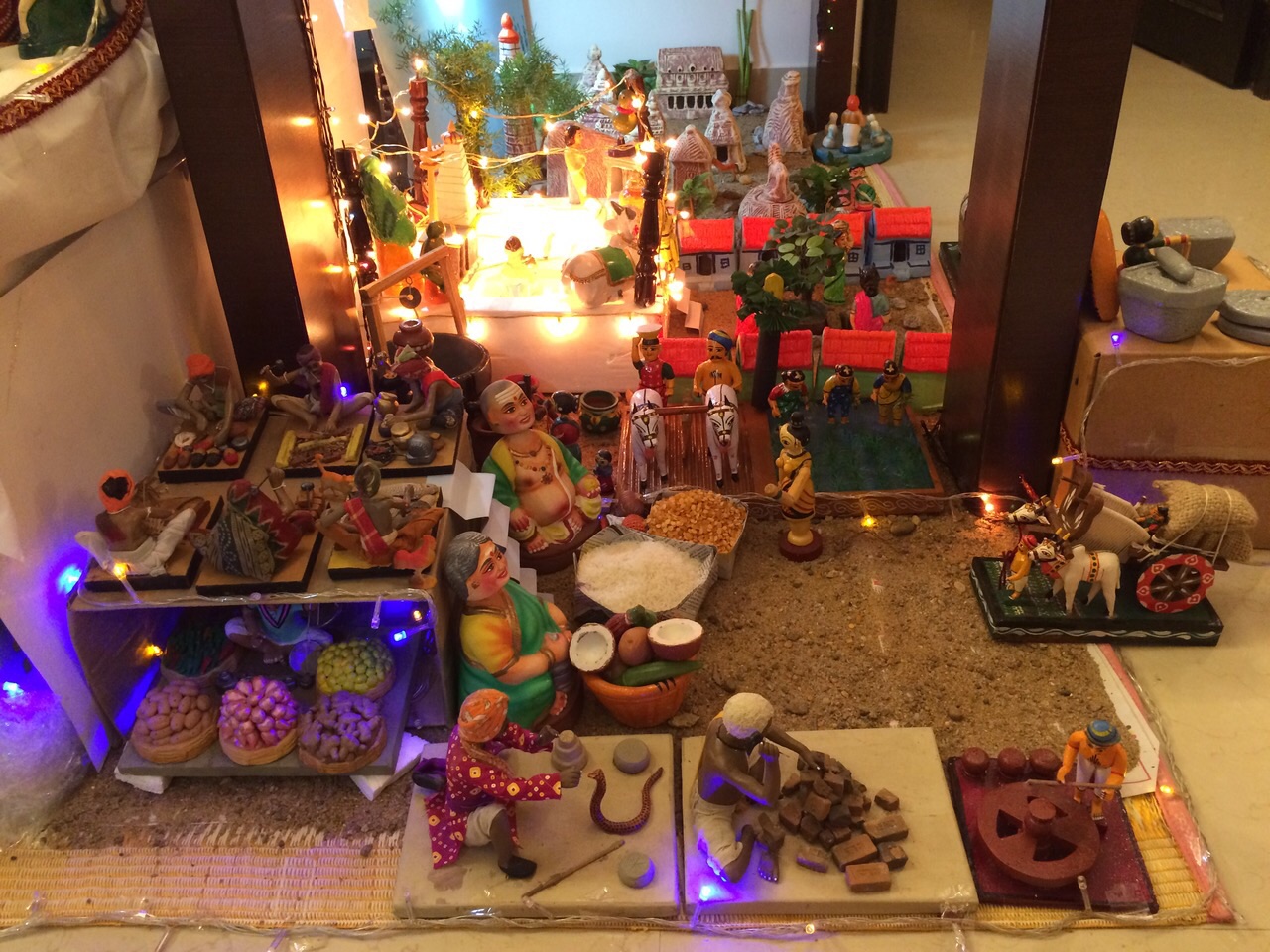
Personally I was amazed that the effort that goes into celebrating this festival and making it look as beautiful as these pictures. SJ mentioned that their family keeps picking up relevant dolls throughout the year where ever they go and this means a good investment. The dolls are never thrown away and then the collection keeps on building over years. The dolls need to be stored in a manner that they could be used the following year without any damage. Storage also becomes a task that if gone wrong would mean people from different mythologies sitting at odd places. e.g. Ram in the set up of Mahabharata. So ideally. not just storage but a logical storage is crucial.
This was indeed a day well spent and I would say I was blessed to be able to celebrate this festival with SJ’s family 🙂 Happy Golu everyone! May the divine presence look after you.
Linking this post to the Write Tribe Pro Bloggers Challenge – October (Post #7). A pledge to write daily or at least write more than September 🙂
 happiness and food
wow.. Recently i got to learn little about Golu Festival.. Wanted to learn more about it.. and here you go.. South India is full of surprises and learning.. Great post.. Right in time
LikeLike
Thanks Neha!
Glad you liked the post. 🙂
LikeLike
Thanks Parul for caturing these memories and tradition so beautifully
LikeLiked by 1 person
Shilpa – Thank you for having us over. I loved everything at your place and this post is my gratitude 🙂
LikeLike
It’s always good to learn something new. I learn something from your posts. 😉
LikeLiked by 1 person
How sweet Dolce 🙂 🙂
LikeLike
Beautiful post! 🙂
LikeLike
Thank you Aiswarya!! 🙂
LikeLike
Looks really cute… the whole thing is so colorful!
In Bengal during chariot festival, kids put up somewhat similar shows… we call it ‘Jhulon’ (Zhoo-lawn)
Thanks for sharing this Golu’s tale and festive photos 🙂
LikeLike
Yep! Super colorful. Thanks for sharing about the Bengali tradition. May be next year you could share pics of jholun.. Hard to pronounce 😉
LikeLike
Pronounce it- Zhoo-lawnn 😀
LikeLiked by 1 person
Beautiful 🙂 it is amazing to see how few people strive hard to retain our traditions!
LikeLike
Thank you for stopping by Chandini! Yes, some people do that beautifully 🙂
LikeLike
Beautiful. Golu I had seen at a friends place the first time when I was 5 or 6. I was completely taken up by the dolls.
LikeLiked by 1 person
Yes, it is so beautiful! Thank you Lata for stopping by!
LikeLiked by 1 person
Beautiful… and so divine!
LikeLiked by 1 person
Thank you Nisha 🙂
LikeLike