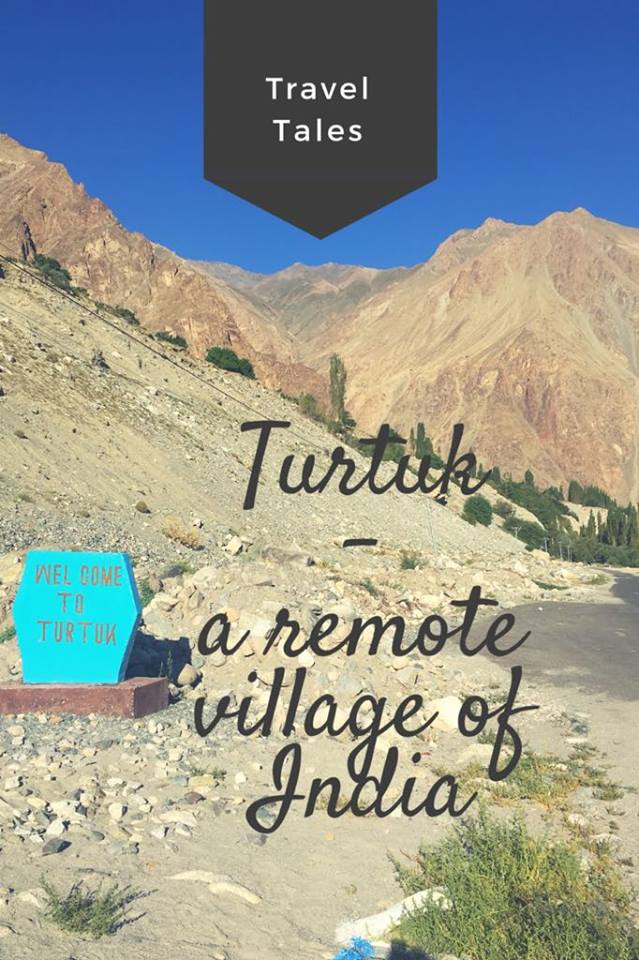
Turtuk. A name that piqued my interest when we were firming our itinerary for our 12-day road trip to Ladakh.
Turtuk was on radar for one reason. That it is the last out post of India. Less than 50 kilometers beyond this village, Pakistan controlled Gilgit-Baltistan begins. We wanted to see what it feels like spending a day in such a remote part of the country.
We knew that there would be no data or network connection in the village. Most outside networks do not work in the region and we did not have a local connection. What took us by surprise was that the village gets only four hours of power supply everyday. Sharp at 7 pm, the houses of the village light up. People finish chores and children enjoy their screen time. Exactly at 11pm, it’s time for bed. The power cut acts like an alarm until the Sun rises next day to wake everyone up.
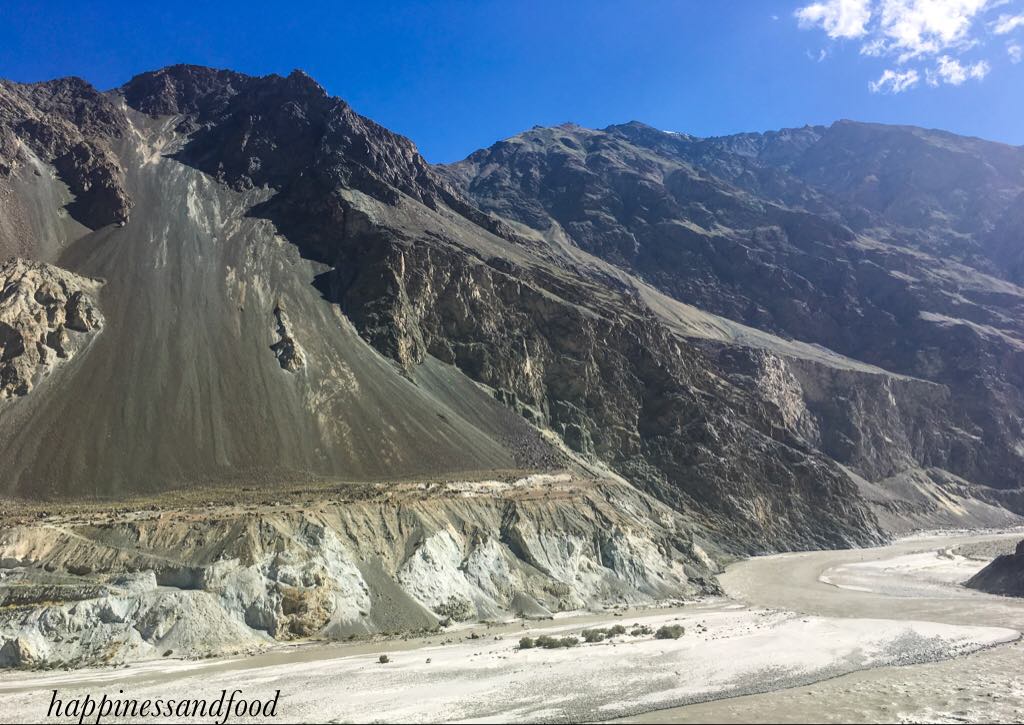
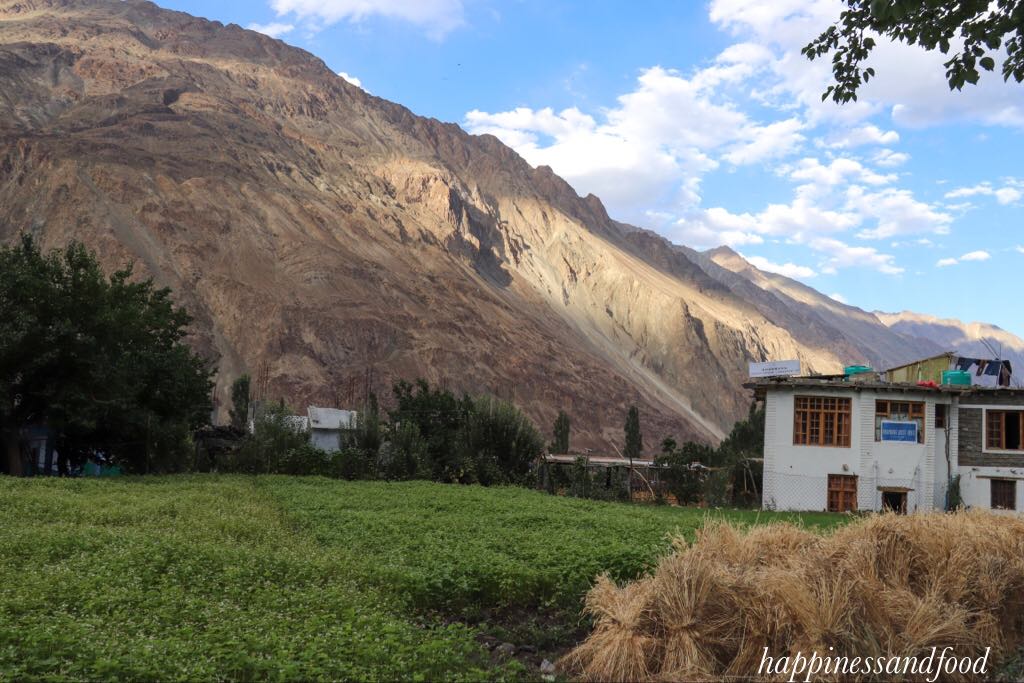
Located on the banks of Shyok river, Turtuk is far away from everything including chaos. Driving towards the village, I was not sure what we were going to experience. The endless road meandered along Shyok for as long as I could see. On the other side were mountain ranges. But not before the ascent to the mighty Khardung La.
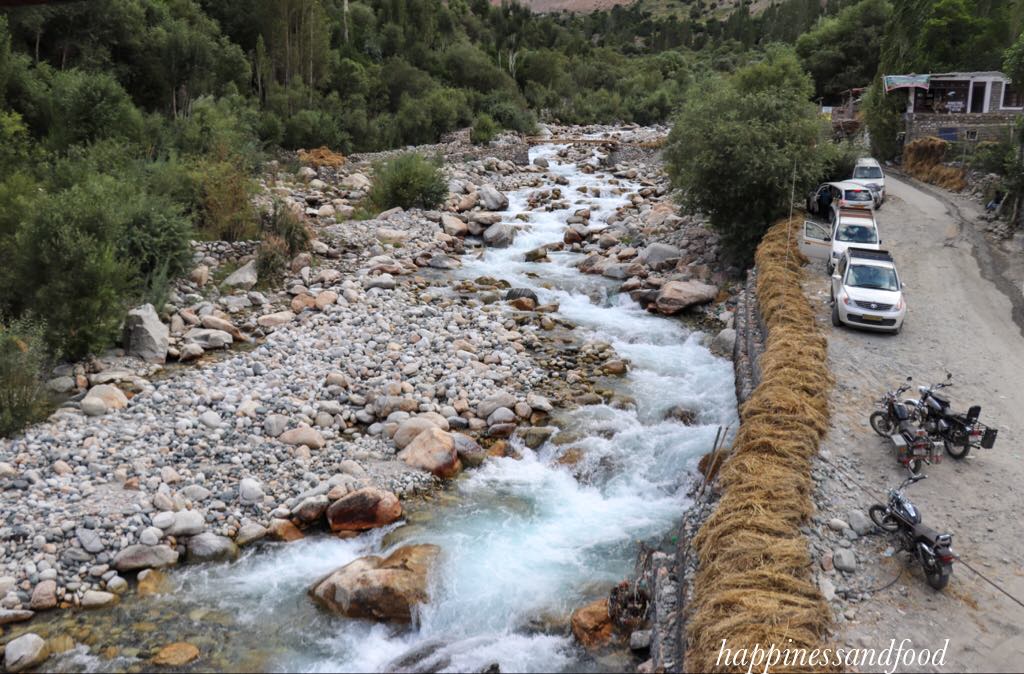
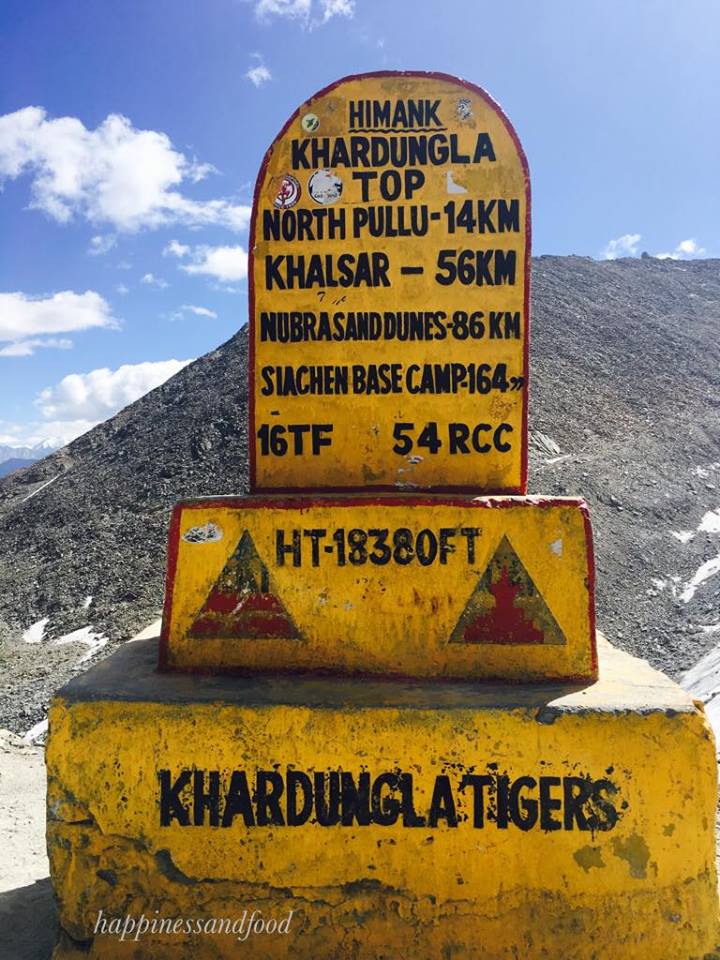
How to reach? Turtuk is ~200 kilometers from Leh, the largest city in Ladakh. Having your own vehicle is the best way to reach Turtuk but taxis and local buses also ply between Leh and Turtuk. Needless to say, the journey is picturesque and one has to cross one of the highest motorable passes to reach the village. Turtuk was opened to tourists in 2009. The temperature in the region dips far below negative in winters and hence tourism is still picking up. Even in the tourist season (like the locals like to say), the roads leading to the village are peaceful. You may spot a bike or car but for most of the journey, you pretty much are on your own. Like you can imagine, there are no milestones as well.
History of Turtuk: In 1947-48, the independent countries of India and Pakistan fought over the state of Kashmir and Jammu. The result of the war was inconclusive as Wikipedia explains it. A formal cease-fire was declared and the line of control was drawn between the two countries. At the end of the war, Turtuk came under the control of Pakistan. Three other villages – Dhothang, Tyakshi (earlier called Tiaqsi) and Chalunka came under control of India.
In the war of 1971, the Indian troops captured Turtuk and it became a part of India. Sad as it may seem, many families still have relatives in Pakistan and travel to the country is an impossible affair. However, the locals are more patriotic than I have seen in the rest of the country. They love being a part of India and have great support from the Indian army that watches over their safety. The employ, source food for the locals and also provide them with basic infrastructure.

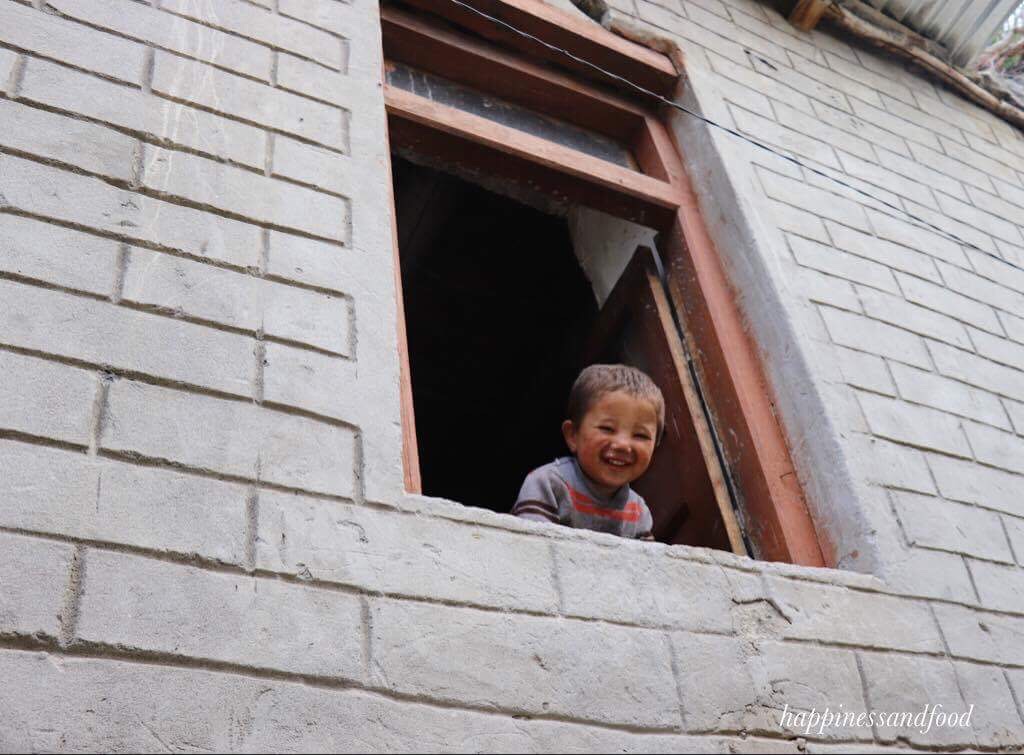
A village tour: If you reach Turtuk before the Sun sets, you can walk around the village for a tour. Most home stays offer a guided tour so you don’t have to worry about finding your way back. It is a Muslim village in a region that is Buddhist but the peace that you experience is beyond imagination. All through the walk, we exchanged smiles with innocent faces who love seeing tourists from all over the world.
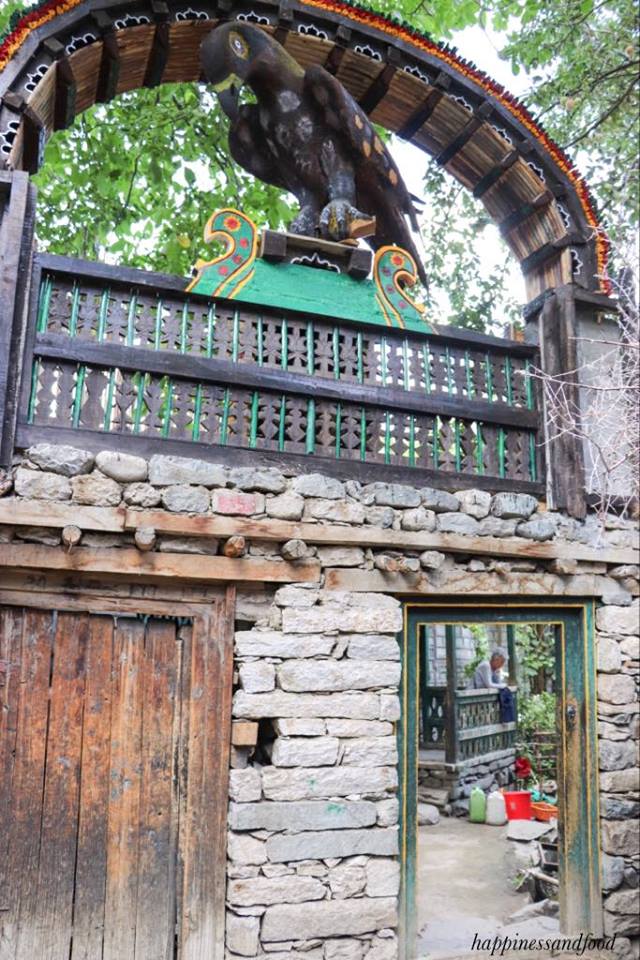
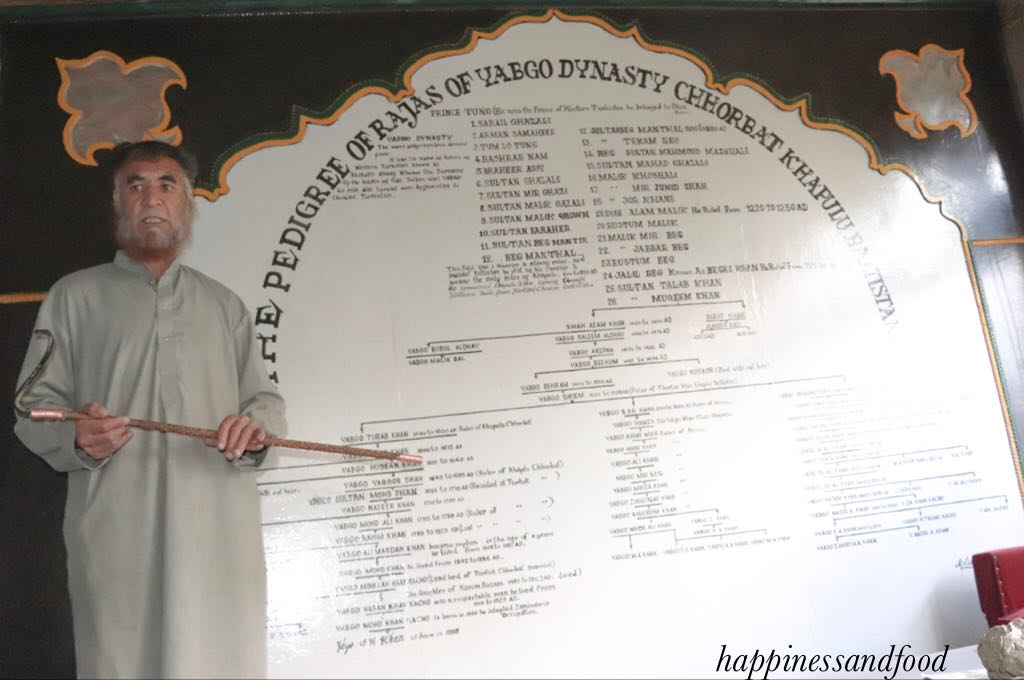
The Royal Palace: The highlight of the guided tour is a visit to the house of Yabgo Mohammad Khan Kacho, the King of Baltistan. He is not a king with powers and any sort of privileges. The kingdom is his lineage and the palace is a big house in the neighborhood that was damaged by the Pakistani army who tried to rob it for the jewels it had. He is a direct descendant of the Yabgo Dynasty of Chorbat-Khaplu, a region that is now in the territory of Pakistan occupied Kashmir. His own family is across the border and he is too old to work.
When we went to the palace, he welcomed us to a small hall upstairs where many students sat to listen to him. He talked about the history of his ancestors. The wars they fought and the part of Central Asia they came from. This hall is a mini museum too with some artifacts like costumes and vessels that remained from the robbery attempt. Some of these are damaged too. There is no fees if you would like to visit the palace but if you can, donate. This is not charity but a small value of the time Yabgo Khan spends to apprise tourists of the history of the region. Stories from 9th century that you may not find time to read.
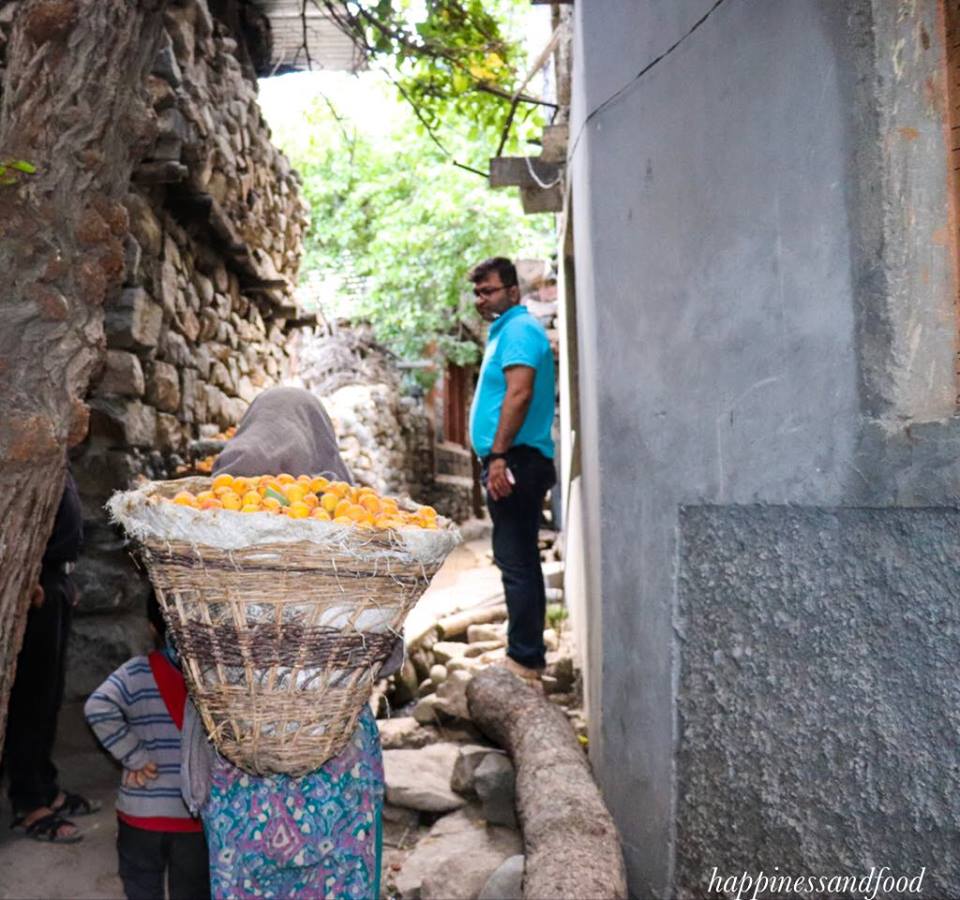
Apricots and apples: Before visiting Turtuk, I have had candied apricots and apples that come with labels. While on the village tour, I had to walk carefully so that I don’t step on apricots. Apricots are grown in abundance and the orange-colored fruit strewn all over the lanes of the village made me smile. While I was walking, a naughty little apple fell on my head and slipped into a small stream of Shyok. Our guide told me to eat it up. It was for me and also got washed in the cold and clean water of the river. It was one of the most delicious apples I have ever had.

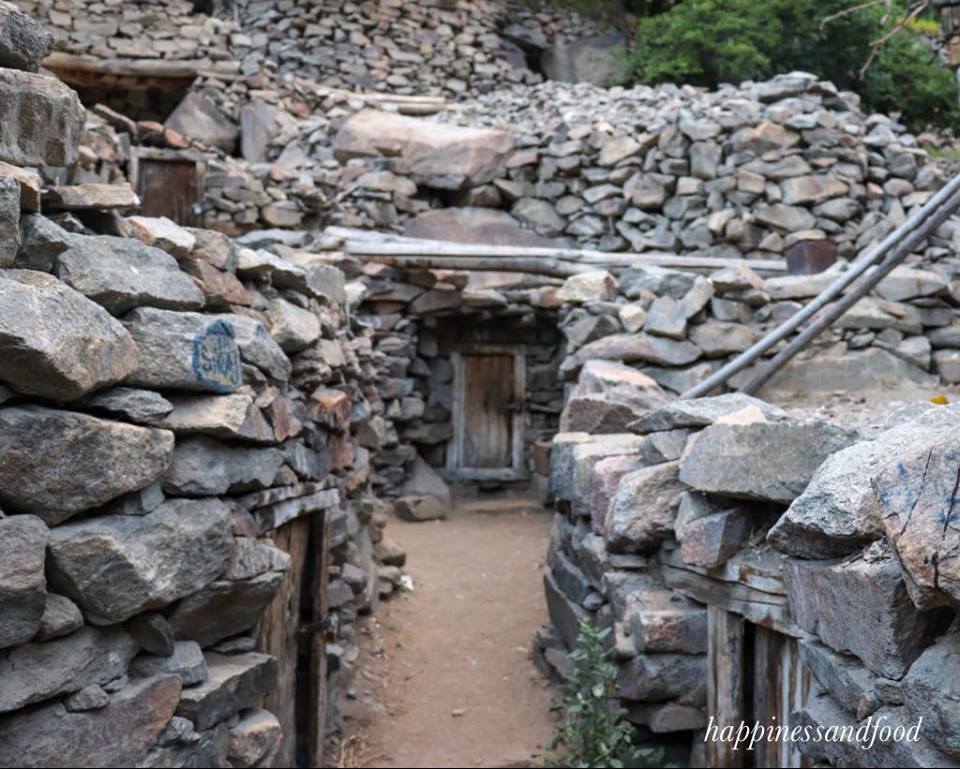
Natural refrigerator: If you are on the guided walking tour of the village, your guide will take you to a place that sure has a scientific reason but the villagers don’t know yet. There is a small area of the village further away where the air is very cold. It is so cold that those who had foresightedness created small lockers and started using these lockers as refrigerators. They store perishables in these small lockers and there are around 9 refrigerators in the village. Only the rich own it but they are kind enough to help those who need space. We could not look into one but I sat close to one of the doors and trust me, it did feel like I was somewhere near a cold storage.
On our way back, we visited a small cafe for a cup of coffee and met many other tourists there. The village is popular as foreign nationals love the quiet surroundings and lack of obvious connections. This small cafe also sold some sun-dried apricots that I picked up.
From there, we walked back to our guesthouse. The same lanes and the smiling faces leaving an impression that is impossible to recreate. By the time we reached, it was dark outside but the lights had brightened the inside of our tent. We had three more hours until it was time to sleep. I quickly made notes from my day and smiled at the fact that travel indeed makes us richer. By experiences and memories. I don’t remember the dinner I had that day or anything else about the ambience of the restaurant but that people were kind and generous. Those who opened their farm for us to look into and then those who smiled for the camera.
We left the village the next day with just two hopes. One, that the people of Turtuk should be reunited with their families across the border and two, that we would love to be back some day.
 happiness and food
Reminded me of my own sojourns! Turtuk is magic. Great post. Splendid pictures too.
LikeLike
Thank you Shubham. You are right. It is magic.
LikeLike
Such a nice travelogue Parul. Thanks for sharing these interesting details about Turtuk.
LikeLike
Thank you Ramya!
LikeLike
What an interesting post. It’s fascinating to learn the history of the village. 🙂
LikeLike
Is was very fascinating. Thank you Ritu.
LikeLike
Wow! This was an incredibly interesting read. The cold “lockers” are crazy! I wonder what natural phenomena cause that?!
LikeLike
I also wonder that but I’m sure there is something.. thank you!
LikeLike
So many fascinating and interesting sights Parul, and so well described.
LikeLike
Thank you Denzil. Glad you stopped by!
LikeLike
What a beautiful thing you experienced, Parul! Thanks so much for sharing it with us. The picture of the little boy and his large smile was just darling – my favorite of your beautiful photos. Seeing that little boy’s big smile, I wonder if reverting back to a simpler life would be healthier for some of us. I love reading my great-grandfather’s journal – it makes me dream of a life of simple pleasures. Lovely post!
LikeLike
Thank you Erin! That picture has been used twice on my blog. It is so cute. I know what you mean. Our lives are more complex now. I would love to read a journal like that. Sure gives a perspective on what life the elders had. Thank you for sharing your thoughts.
LikeLike
This post was fascinating to read – I love the photographs, in particular, the ones of the Place and where the jewels used to be!
LikeLike
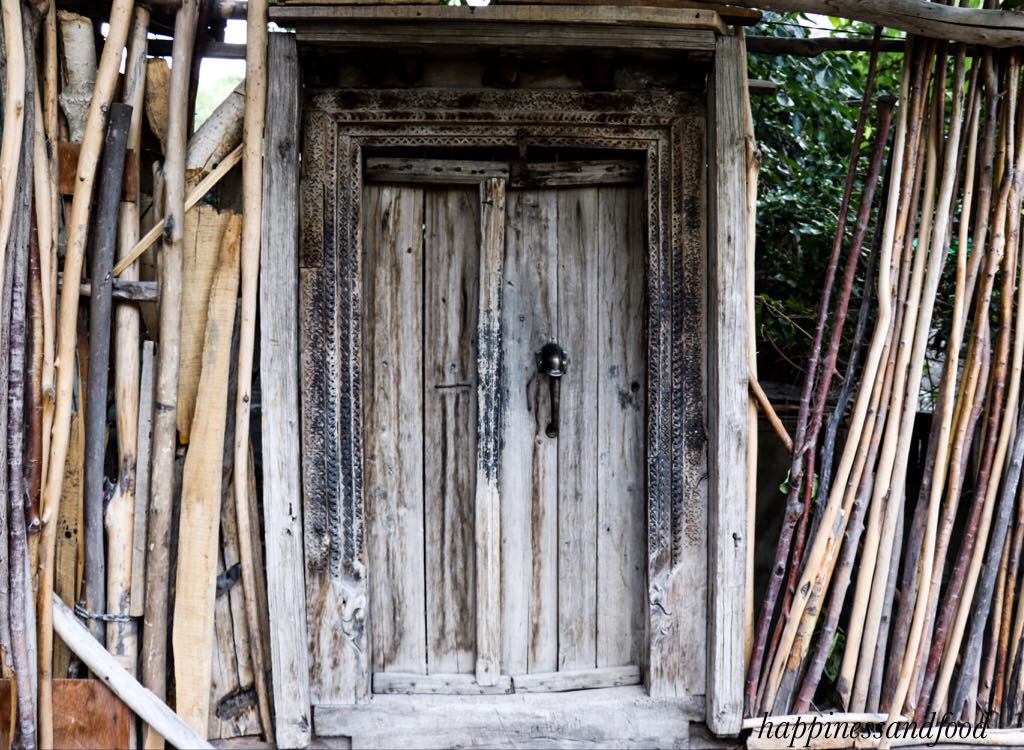
Thank you! Yes, the door had carvings but no jewels. It was fascinating to know about the robbery.
LikeLike
Beautiful! India has so much to offer… Everytime I see places like this, I fall in love with India even more!
LikeLike
True that. India is incredibly beautiful and many places are so off beat than the usual.
LikeLike
Loved the photographs! Sometimes it’s the most offbeat places that bring us the best memories!
LikeLike
I agree Shinjini. Thanks for stopping by.
LikeLike
I love the photo of “the happy kid”, wonderful 🙂 We enjoy exploring smaller places more than cities.
LikeLike
Yes 🙂 thank you for stopping by!
LikeLike
I love your travel stories. I get to visit places I may never have the pleasure to see. Always well researched and informative.
LikeLike
Thank you Diana. I’m so happy to hear that. I’ve been slow at documenting but I’m trying 🙂
LikeLike
Off beat destinations are real travel in fact as they say be a traveler not a tourist, can see the trailer soul in you, keep it up.
LikeLike
Thank you Pooja!
LikeLike
At once a beautiful travel guide and a snippet of memories you took away from this place. I admire the attention to the little details, the things that most of us tend to overlook when we’re traveling somewhere. Such a fascinating piece of history with regard to the war and that little nugget about only four hours of electricity. How pampered we are as a generation to live in the urban jungle, isn’t it?
LikeLike
Yes! The entire region only gets 4 hours and they are happy but we want 24 hours supply and back up in case of breakdown.
LikeLike
This was such a beautiful travelogue, Parul. Kudos to you guys for making the effort to explore this remote village. They only get 4 hours of electricity? Wow! I loved reading about the palace and that cold spot. There are so many fascinating details that you’ve captured. Loved it. I have avoided going to Leh Ladakh mostly due to the altitude. But I would love to go someday.
LikeLike
Thank you Rachna! Unless you have issues, the altitude can be managed with a pill a day. You work out so it should be easy for you.
LikeLike
Thank you for taking me there with your words and pictures, Parul.
The reluctant traveler that I am, I think this is the only way I’ll see these places in Incredible India.
LikeLike
Thanks Naba! I loved this village and ended up writing a big post.
LikeLike
It looks great! Tempting me to go on a trip!
LikeLike
Thank you! If you get a chance, you should.
LikeLike
Ladakh is so on my bucket list. I have dreams going to this place but whenever I travel to India, my days are populated by visits to relatives and the likes. Can’t deny those too. But one day Parul, one day 😀 Thanks for sharing this experience with me. ❤
LikeLike
This is going on my itinerary whenever I plan that much needed trip to Ladakh! The pictures look so beautiful and earthy and has your extra touch to them ❤
Thank you for such a brilliantly detailed post. I'm bookmarking this rightaway.
LikeLike
We missed the Nubra Valley side, so missed Turtuk as well. Loved their natural refrigerator idea. Very cool.
Thanks for bringing back some memories of our Leh Trip and for introducing this new place too!
LikeLike
Visiting such a place evokes several emotions in one’s mind. The last Indian outpost indeed is a place that holds history. Hope I’ll visit this side of the country someday.
P.S. My comment on your post “She Came…Office” didn’t appear. Maybe it landed in the spam folder. Kindly check.
LikeLike
Such fantastic post. thanks for sharing the post. All the pictures are looking so nice.
LikeLike
Really nice blog, thanks for sharing such information about turtuk
LikeLike